


NEWS
—— NEWS CENTER ——
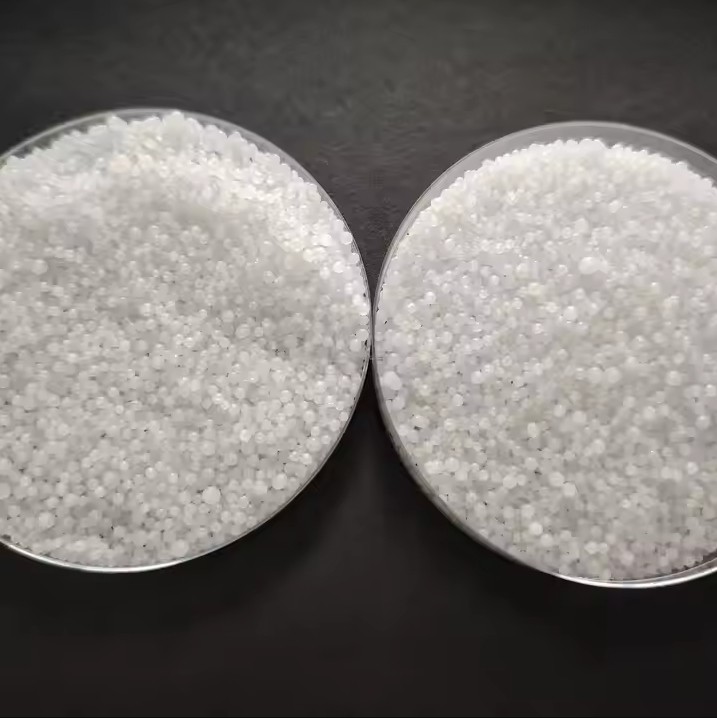

I. What is Urea? What are its uses?
Crop growth is inseparable from chemical fertilizers, and it is thanks to the use of chemical fertilizers that hundreds of millions of people are fed. Commonly used chemical fertilizers are divided into three main categories: nitrogen fertilizers, phosphate fertilizers, and potash fertilizers, and urea is an important type of nitrogen fertilizer. Below, we will gain a comprehensive understanding of urea.
1. Structure and Physicochemical Properties of Urea
In 1773, Hilaire-Marin Rouelle discovered urea in animal urine. In 1828, Friedrich Wöhler first artificially synthesized urea using the inorganic substances potassium cyanate and ammonium sulfate. He originally intended to synthesize ammonium cyanate (NH4NCO), but unexpectedly obtained urea.
This proved that the vitalism theory was wrong. The vitalism theory held that there was a fundamental difference between inorganic and organic matter, so inorganic matter could not be transformed into organic matter. The synthesis of urea overturned this theory and marked the birth of organic chemistry.
The following are the physical and chemical properties of urea. Physical Properties:
Appearance: Colorless or white needle-like or rod-like crystals; industrial or agricultural grade is a white solid granule with a slight reddish tinge; odorless and tasteless (yes, you read that right); nitrogen content is approximately 46.67% (calculated based on molecular weight; actual nitrogen content depends on purity).
Boiling Point: 196.6°C (at 760 mmHg).
Refractive Index: n²⁰/D 1.40.
Flash Point: 72.7°C.
Density: 1.335.
Melting Point: 132.7°C.
Water Solubility: 1080 g/L (20°C).
Solubility: Soluble in water, methanol, formaldehyde, ethanol, liquid ammonia, and alcohols; slightly soluble in ether, chloroform, and benzene. Weakly alkaline.
Chemical Properties:
Reacts with acids to form salts. Exhibits hydrolysis. Urea undergoes condensation reactions at high temperatures to produce biuret, triuret, and cyanuric acid. It decomposes upon heating to 160°C, producing ammonia and isocyanate.
Urea hydrolyzes to ammonia and carbon dioxide under the action of acids, alkalis, and enzymes (acids and alkalis require heating).
Urea is thermally unstable; heating to 150-160°C will deaminate it to biuret. Copper sulfate reacts with biuret to produce a purple color, which can be used to identify urea. Rapid heating will deaminate it and trimerize it into the six-membered ring compound cyanuric acid. It reacts with acetyl chloride or acetic anhydride to produce acetylurea and diacetylurea.
It reacts with diethyl malonate in the presence of sodium ethoxide to produce malonylurea (also known as barbituric acid due to its acidity).
It reacts with formaldehyde under alkaline catalysts such as ammonia to condense into urea-formaldehyde resin.
It reacts with hydrazine hydrate to produce aminourea.
Finally, it's important to clarify that since urea is colorless and odorless, where does the pungent smell of urine come from? This involves a misunderstanding of the word "urine." Just as there's no fish in shredded pork with garlic sauce or no wife in wife cake, urea doesn't necessarily smell like urine. In reality, the pungent smell of urine comes from the small amount of ammonium ions that form when urea dissolves in water. These ions decompose and release ammonia gas (those who have done university chemistry experiments will surely remember the smell of this gas). This pungent smell has been unfairly blamed on urea for centuries!
2. Urea Preparation Methods – How is Urea Obtained?
Commercial urea is produced from ammonia and carbon dioxide. The latter is generated in large quantities during the production of ammonia from coke or hydrocarbons (such as natural gas and petroleum). Urea is thus produced directly from these raw materials.
Urea production is an equilibrium chemical reaction, where the reactants do not completely become the result. The production process, the set reaction conditions, and how unconverted reactants are handled can all vary. Because a large amount of reactants are used, unreacted reactants can be used to produce other products (such as ammonium nitrate or ammonium sulfate) or recycled and reused in the reaction.
The actual synthesis reaction is generally considered to be completed in the liquid phase in two main steps:
The first step is the reaction of excess liquid ammonia with dry ice to produce ammonium carbamate. Since this is a reversible exothermic reaction, equipment is needed to remove the heat energy.
2NH3 + CO2 ↔ H2N-COONH4 + 28 kcal
The second step is the heating of ammonium carbamate to produce urea; this is a reversible endothermic reaction. Equipment is needed to remove moisture.
H2N-COONH4 ↔ (NH2)2CO + H2O - 3.6 kcal
The overall reaction formula for urea is:
2NH3 + CO2 → CO(NH2)2 + H2O
This is a reversible exothermic reaction.
The ammonia gas needed for urea production can be synthesized from hydrogen and nitrogen under high temperature and pressure using the Harper synthesis process. For more information on the Harper synthesis process, please refer to the previous article by Poker Investor, "All About Fertilizers: From a Major Importer to the World's Largest Producer – A Comprehensive Overview of China's Urea Industry History."
3. Uses of Urea – Versatile and Versatile!
Anyone who has studied junior high school chemistry knows that urea is a high-quality nitrogen fertilizer (theoretically containing up to 46.67% nitrogen). However, in reality, urea's applications extend far beyond fertilizers. Statistics show that urea has nearly 20 main applications, covering agriculture, industry, medicine, food, and many other fields – truly a versatile fertilizer.
In agriculture, nitrogen fertilizer is the most widely used and most important fertilizer. Currently, nitrogen fertilizer accounts for 60% of global fertilizer usage, phosphate fertilizer for 23%, and potash fertilizer for 17%. Internationally, urea is the dominant nitrogen fertilizer, currently the most widely used fertilizer globally. In my country, nitrogen fertilizer accounts for 73% of total fertilizer use, compared to 22% for phosphate fertilizer and only 5% for potash fertilizer. Currently, urea is the primary nitrogen fertilizer used domestically, accounting for 60% of nitrogen fertilizer consumption (approximately 43.8% of domestic fertilizer consumption).
Besides urea, other nitrogen fertilizers used domestically include ammonium bicarbonate (NH4HCO3), ammonium sulfate ((NH4)2SO4), ammonium chloride (NH4Cl), ammonia water (NH3.H2O), liquid ammonia (NH3), and ammonium nitrate (NH4NO3). However, urea has the highest nitrogen content and is easier to transport and store, thus holding the top position in usage.
Urea can be used not only as a fertilizer for plant growth but also as animal feed. In 1897, Waesk et al. proposed that ruminants could convert non-protein nitrogen into microbial protein. In 1949, C. J. Watson et al. fed sheep capsules containing N15-labeled urea. Four days later, N15-containing proteins were detected in the sheep's blood, liver, and kidneys. This confirmed that ruminants can utilize non-protein nitrogen. Further research showed that the microorganisms in their stomachs could use urea to synthesize the 10 essential amino acids needed for their growth. Since then, urea and urea compounds have become feed additives for ruminants such as cattle and sheep. We might not imagine that beef enthusiasts might have grown up "drinking urine"!